Rethinking legacy
Why legacy is now a story of timing, family and purpose

Legacy is often thought of as something we leave behind. For many of us, the desire to support the people we care about runs deep, with eight in 10 expecting to pass on wealth during their lifetime or as an inheritance.
But as people live longer and families’ needs change, it’s time to reconsider what ‘legacy’ can mean. Support given during your lifetime could help someone you care about at an important moment in their life, while allowing you to see the difference it makes.
Importantly, legacy needn’t mean passing on a large amount of money. It can encompass financial, practical and emotional support, shaped by what your family needs and what you can afford.
A meaningful legacy is no longer only about how much you pass on. It’s also a story of timing, family and purpose.
Timing
When could support make the greatest difference?
When it comes to passing on wealth, when support arrives can matter as much as how much is given. Our Life100+ research found that financial gifts received earlier in life are more likely to help with important milestones, such as buying a home, paying for education or clearing debt. By contrast, inheritances received later are more likely to be added to savings. Both can be valuable, but they may make a difference in different ways.
There’s no universally right time to provide support, so before giving money away (sometimes known as ‘lifetime gifts’), it’s important to consider what you may need for your own retirement, unexpected costs and possible care needs. The aim is to balance the difference you would like to make with confidence in your own financial future.
How financial gifts and inheritances can make a difference
Financial support can affect people’s lives in many ways. Although adding the money to savings was the most common response, people also used, or expected to use, financial gifts and inheritances to meet everyday costs, help other family members, clear debts and buy a home.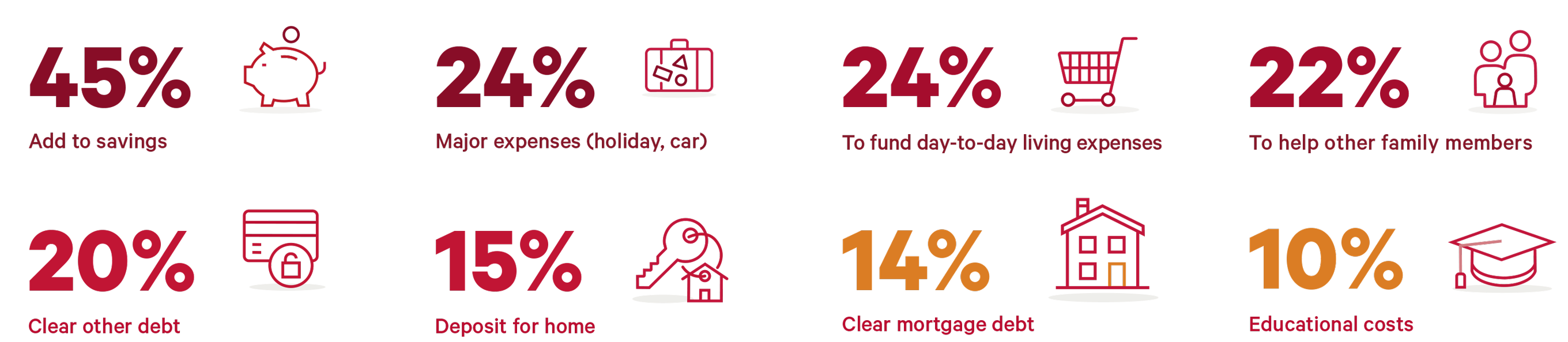
Base: UK adults who have received or expect to receive financial gifts or an inheritance.
Family
The many ways families support one another
Legacy is not limited to an inheritance or a one-off financial gift. It can be found in the many ways families help one another through life, from contributing towards a first home or education to providing childcare, practical help or care in later years.
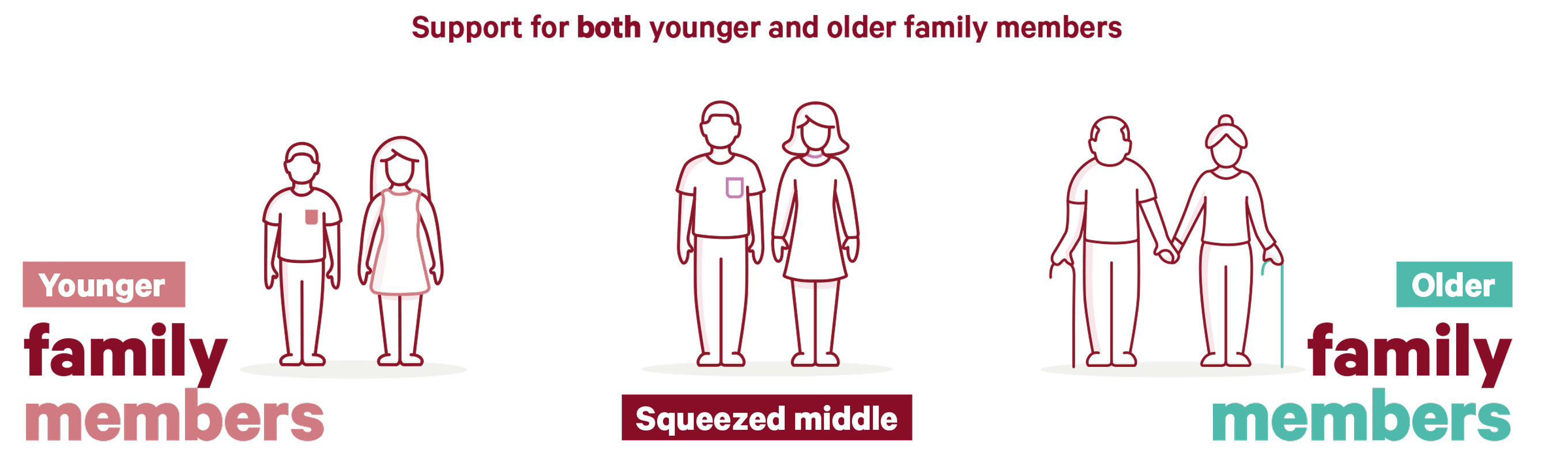
Support can also flow between generations in different directions. More than one in four adults provide financial or practical support to both older and younger family members. Some are helping their children build their futures while caring for older relatives and preparing for their own later lives.
Our financial lives are increasingly connected to the generations around us. Legacy is not only about what we leave behind, but also the conversations and choices that help families support one another throughout life.

The Curve of Life
Unfortunately, this support can add pressure to those in the ‘squeezed middle’ or the ‘sandwich generation’, who are often experiencing the midlife dip in life satisfaction. We explore this dip, why it occurs and what you can do about it in our Curve of Life resources.
Every family has its own needs, relationships and circumstances. Talking openly about what matters and what is realistically possible can help families decide where support could make the greatest difference, manage expectations and create a shared understanding. Fairness does not always mean supporting everyone in exactly the same way.
Purpose
What do you want your legacy to achieve?
Legacy is often about an intention. You may want to help someone feel more secure, take an important step in life, or make choices that might not otherwise be possible.
Our research found that half of those who had given, or planned to give, wanted to make a positive difference during their lifetime. The opportunity to experience the joy of giving also mattered more to people than inheritance tax considerations alone. Starting with the difference you want to make can help you consider what form your support should take and when it might be most valuable.
But turning a good intention into a lasting legacy also means understanding what you can sustainably afford. A considered plan can help you support the people you care about while protecting your own financial security and retaining flexibility if circumstances change.
A case study
Gifting when it matters most
When Kate and her family downsized, they used some of the money released from their home to help four children buy their first properties.
The support arrived when saving for a deposit was a significant barrier. Since then, Kate has seen how that initial help allowed each recipient to begin building equity, which they could carry forward when moving to another home. Being able to see the difference the gifts made was an important part of the experience.
But helping family members also meant thinking carefully about the future.
Kate and her family protected their pensions and savings and retained an emergency reserve before considering whether they could afford to provide further support.
Their experience shows how giving earlier can have a lasting impact, while careful planning can help protect the giver’s own financial security.
“We’d rather do that and see them benefit. They’re better off having that now.”
Creating a legacy that is right for you
There is no single right time or way to create a legacy. What matters is the difference you want to make, the needs of the people you care about, and what you can sustainably afford.
Legacy planning does not have to mean setting aside a large sum of money or locking it away for the future. A flexible plan can help you consider how you might support your family over time, while keeping money available for your own needs or an unexpected change in circumstances, such as helping with a relative’s care.
Financial advice is not only for people with significant wealth or those ready to make a large gift. An adviser can help you understand your options, consider the needs of the wider family, and create a plan that can adapt as circumstances change.

Why do we work with financial advisers?
Good financial planning and sound advice are critical to your current and future well-being. A professional adviser can help you weigh your options and understand the pros and cons of individual financial products. We recommend getting advice for all key financial decisions.
This webpage is for general information only and does not constitute financial advice. Your circumstances are personal to you, so consider speaking to a financial adviser before making any significant or irreversible financial decision.